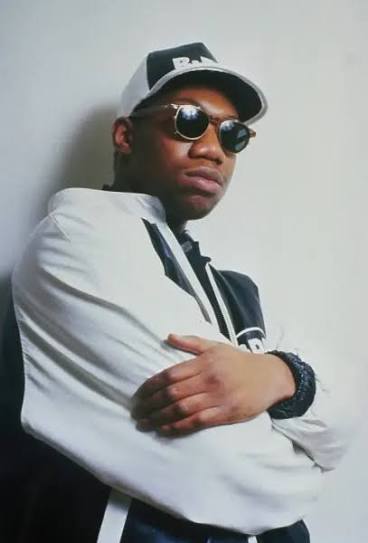

KRS-One:
The Teacher, The Blastmaster and a Living History of Hip Hop
Why a KRS-One performance in Glostrup is more than a concert
There are rappers who have had hit records. There are rappers who have influenced generations. And then there are artists whose careers have become inseparable from the history, philosophy and identity of Hip Hop itself.
KRS-One belongs firmly in the third category.
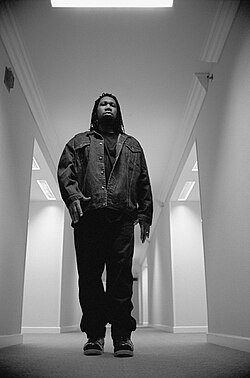
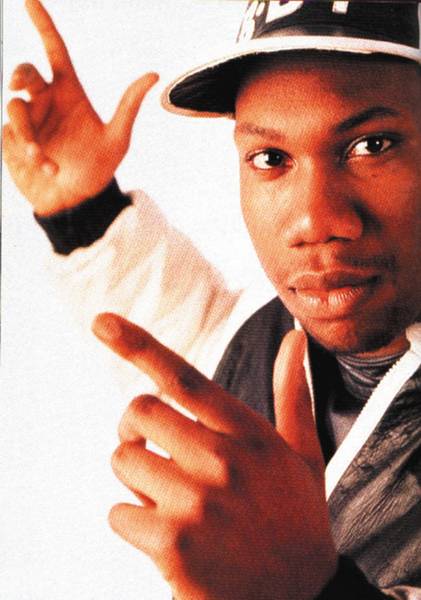
When KRS-One arrives at Glostrup Street Festival, audiences will not simply be watching a veteran rapper perform songs from a remarkable catalogue. They will be standing in front of one of Hip Hop’s most important surviving voices — an artist who has spent four decades arguing that Hip Hop is not merely a musical genre, but a culture, a language, a form of education and a way of understanding the world.
His presence at the festival is therefore significant. For older Hip Hop fans, it is an opportunity to see an artist whose records helped define an era. For younger audiences, it is an opportunity to encounter one of the people who helped establish many of the principles that continue to shape Hip Hop today.
From the Bronx to Boogie Down Productions
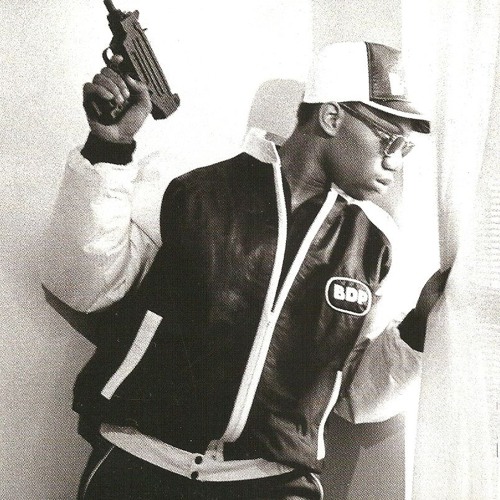
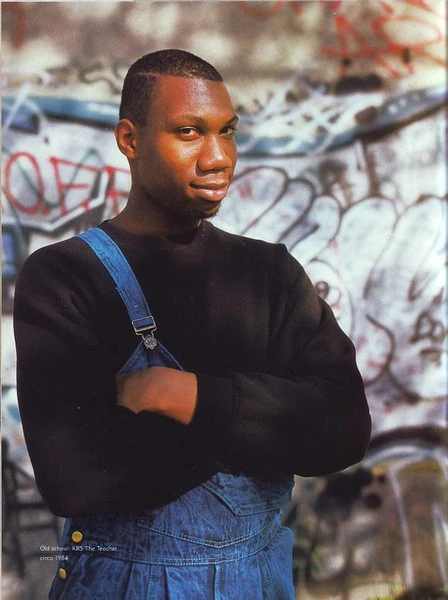
KRS-One, born Lawrence “Kris” Parker in 1965, emerged from the Bronx during the formative years of Hip Hop. As a teenager, he became deeply involved in the culture, writing rhymes and participating in graffiti before developing his identity as an MC.
In the mid-1980s, he met DJ Scott La Rock, a social worker and DJ whom he encountered while living in a Bronx shelter. Their musical partnership became Boogie Down Productions, one of the defining groups of 1980s Hip Hop.
The name itself — Boogie Down Productions — reflected their connection to the Bronx, and the group’s early music captured the rawness of New York street culture while pushing the technical and lyrical boundaries of rap.
Then came Criminal Minded in 1987.
The album is now regarded as one of the foundational records of hardcore Hip Hop. Its stripped-down production, aggressive delivery and uncompromising street narratives helped establish a new sound and attitude. BDP also brought Jamaican dancehall and reggae influences into their Hip Hop, something that would become an important part of KRS-One’s distinctive style.
But the story was about to change dramatically.
“The Bridge Is Over” and the birth of a battle legend
KRS-One’s reputation was not built only in recording studios.
He became famous for his ability to command a live audience and for his participation in the competitive battle culture that was central to early Hip Hop.
One of the most famous episodes was the confrontation surrounding MC Shan’s “The Bridge” and Boogie Down Productions’ response, “South Bronx,” followed by “The Bridge Is Over.”
The dispute was about much more than two songs. It became a debate over Hip Hop’s history and geography — particularly the question of where the culture truly came from and who could claim ownership of that history.
KRS-One approached the conflict as a historian as much as a battle rapper.
His performances helped establish his reputation as “The Blastmaster,” an MC capable of turning a microphone into an instrument of confrontation, education and entertainment.
This was an important development in Hip Hop. The MC was not simply someone who rhymed over a beat. The MC could be a historian, debater, commentator and cultural representative.
KRS-One would spend the rest of his career expanding that idea.
Tragedy and transformation
In August 1987, shortly after the release of Criminal Minded, DJ Scott La Rock was fatally shot while attempting to intervene in a dispute.
For KRS-One, the tragedy changed everything.
Instead of abandoning Boogie Down Productions, he continued the group and transformed its direction. The music became increasingly political, philosophical and socially conscious. By All Means Necessary followed in 1988, and KRS-One increasingly became known as “The Teacher.”
This transformation is one of the most important parts of his legacy.
KRS-One demonstrated that an MC could simultaneously be streetwise and intellectual. He could talk about violence, poverty, racism, politics and survival while also challenging his audience to think.
His music became less concerned with simply describing the environment and more concerned with asking what people could do about it.
From “My Philosophy” to “Edutainment”
KRS-One’s philosophy became increasingly explicit through records such as “My Philosophy” and albums including Ghetto Music: The Blueprint of Hip Hop and Edutainment.
The title Edutainment itself captured the idea that Hip Hop could educate without losing its energy.
That concept became central to KRS-One’s identity.
He did not see the MC merely as an entertainer. He saw the MC as someone with a responsibility to the audience.
This was particularly important at a time when Hip Hop was rapidly becoming a major commercial force. As rap moved from the streets of New York into mainstream American culture, KRS-One repeatedly questioned what might be lost when a culture becomes a product.
His answer was that Hip Hop had to remember where it came from.
That argument remains relevant decades later.
The voice behind “Stop the Violence”
KRS-One’s commitment to social responsibility also led to the creation of the Stop the Violence Movement in the late 1980s.
Following the death of Scott La Rock and further violence affecting the Hip Hop community, KRS-One became increasingly determined to use the culture to confront violence rather than simply reflect it.
The movement produced “Self-Destruction,” a landmark collaborative record involving a remarkable collection of Hip Hop artists. The project demonstrated something fundamental about Hip Hop: rival MCs and different groups could put their differences aside when the culture itself was at stake.
This idea — that Hip Hop could be a force for social change — became one of the defining elements of KRS-One’s career.
The solo years
By the early 1990s, KRS-One began recording increasingly under his own name.
His 1993 album Return of the Boom Bap introduced another generation to his distinctive combination of hard production, technically precise rhyming and social commentary. The album included “Sound of da Police,” which became one of his signature songs and remains one of the most recognisable KRS-One records.
The solo career continued for decades.
But KRS-One never became simply a nostalgia act.
He continued recording, touring, teaching and speaking about Hip Hop culture. His work expanded into lectures, books, cultural education and the Temple of Hip Hop, an organisation he established to explore and preserve the deeper cultural dimensions of Hip Hop.
“Rap is something we do. Hip Hop is something we live.”
Perhaps the best way to understand KRS-One is to understand the distinction he has repeatedly made between rap and Hip Hop.
For KRS-One, rap is an art form.
Hip Hop is a culture.
That distinction is at the centre of his life’s work.
He has spent decades teaching audiences about the history and elements of Hip Hop, from MCing and DJing to graffiti and breaking, while also discussing the culture’s social, philosophical and educational dimensions.
His influence has therefore extended beyond music.
KRS-One has lectured at hundreds of universities, published books and developed the Temple of Hip Hop as a way of encouraging people to study and understand the culture rather than simply consume it. His official biography describes this educational mission as central to his work.



Why KRS-One matters to Hip Hop
KRS-One’s importance can be difficult to explain to someone who only knows Hip Hop through today’s charts.
He represents a period when the MC was expected to have something to say.
He represents the battle tradition.
He represents the Bronx.
He represents hardcore rap.
He represents political and conscious Hip Hop.
He represents the connection between Jamaican dancehall and New York rap.
He represents Hip Hop’s ability to challenge authority.
And perhaps most importantly, he represents the idea that Hip Hop should know its own history.
That is why KRS-One is frequently described in terms such as “The Teacher” and “The Blastmaster.” His influence is not based solely on record sales or chart positions. It comes from the number of artists, MCs, DJs, writers, academics and fans who have been influenced by his approach to the culture.
AllMusic describes Boogie Down Productions as one of the most important and influential Hip Hop groups of the late 1980s, while characterising KRS-One as a pioneer of both hardcore and political rap.
A living connection to Hip Hop history
There is something particularly appropriate about bringing KRS-One to a street festival.
Hip Hop was born as a street culture.
Before it became a global billion-dollar industry, it was something young people created in neighbourhoods, parks, community centres and block parties. It was built from records, turntables, microphones, dance, graffiti, competition, creativity and community.
KRS-One came directly out of that world.
And unlike many artists from Hip Hop’s earliest generations, he has spent his career actively explaining and defending the culture itself.
That makes his appearance in Glostrup more than an anniversary of the past.
It is a meeting between generations.
For those who grew up with Boogie Down Productions, Criminal Minded, “South Bronx,” “My Philosophy” and “Sound of da Police,” KRS-One represents memories of an era that fundamentally changed popular music.
For younger Hip Hop fans, he represents an opportunity to see where many of today’s ideas originated.
And for everyone attending Glostrup Street Festival, it is a chance to experience an artist who has spent approximately four decades doing what he has always done best:
taking the microphone and teaching.
KRS-One is not simply a veteran of Hip Hop.
He is one of its historians.
One of its philosophers.
One of its fiercest competitors.
One of its educators.
And, above all, one of the voices that has consistently reminded the culture to remember who it is.
KRS-One at Glostrup Street Festival
The Glostrup Street Festival’s 2026 Hip Hop programme features KRS ONE alongside Carlo Ahead, Syndikeret, Flammen, Ishøj Allstars and Studie 26, making his appearance one of the headline attractions of the festival’s Hip Hop programme.
For anyone who considers themselves a Hip Hop fan — whether they discovered the culture in the Bronx in the 1970s, through the golden age of the 1980s and 1990s, or through today’s global Hip Hop scene — seeing KRS-One on stage is an opportunity to witness a living piece of the culture’s history.
The Teacher is coming to Glostrup.
And this is one lesson in Hip Hop history that should not be missed.